
Project Details
The City of Sioux Falls has been ahead of the game in the rapidly evolving “no-dig” construction industry. One of the main drivers of this industry’s growth, and why Banner has used its methods for the city, is due to significant cost savings. Cured-In-Place-Pipe (CIPP) lining can access difficult areas and areas where the cost of pavement removal and replacement would drastically increase the project cost. It also reduces the time needed to complete repairs and minimizes construction impact on the public.
For these two projects specifically, several pipes were identified for repair and presented unique challenges. These include severely corroded cast-iron pipes under buildings, deep sewers, sewers under railroad tracks or major city streets, and difficult-to-access pipes, making typical open-cut construction challenging. Unique approaches for manhole rehabilitation were also required for several of these projects.
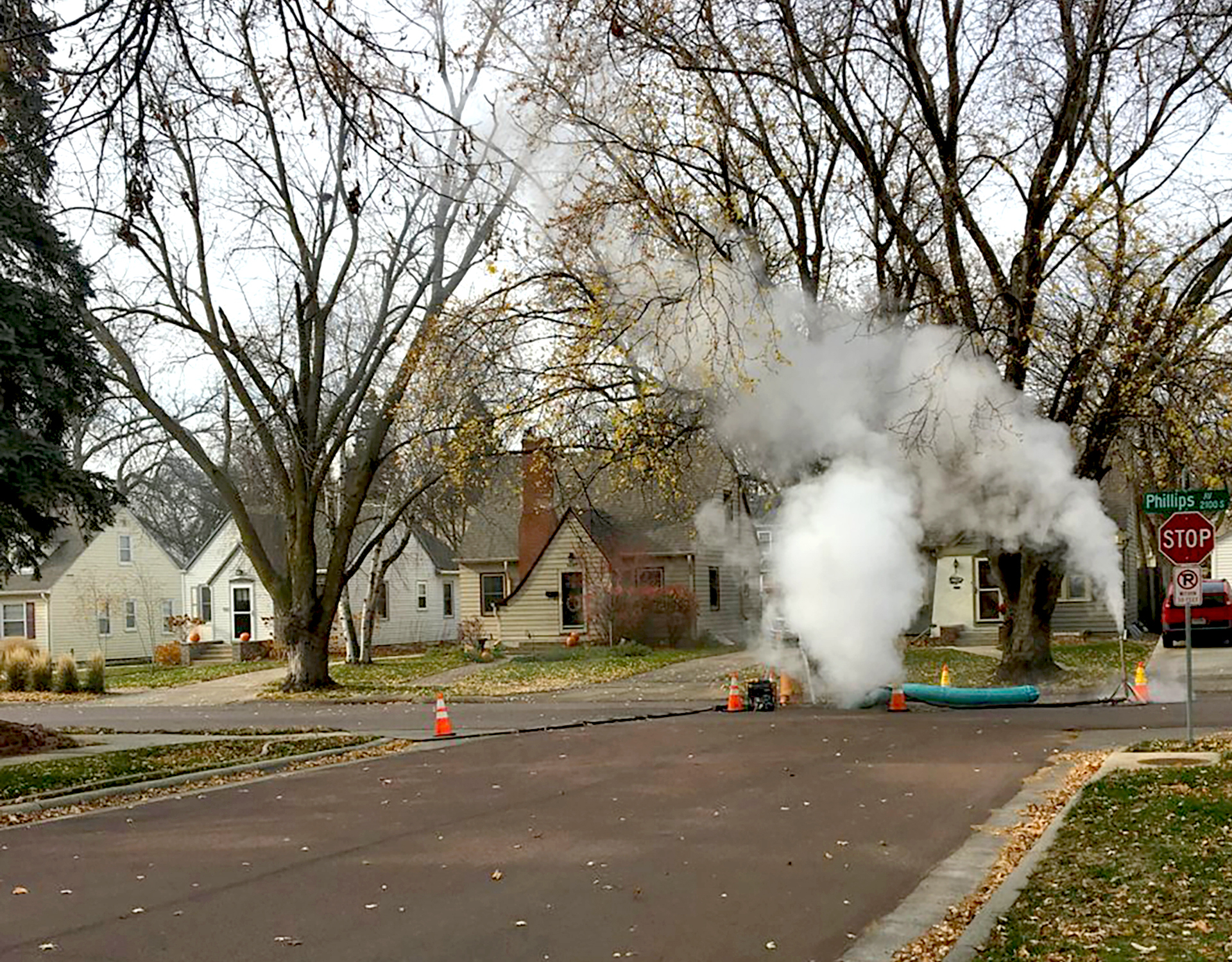
Project 1: This project included a section of 20” pipe that crosses over the Big Sioux River at Falls Park. This was a critical project because of the existing pipe condition and location: it needed to be replaced quickly with minimal disruption to the park. After cleaning and inspection with a robotic camera, a soft, resin-imbued felt liner was routed through existing pipes. Once the liner was in place, it was expanded and cured with steam or pressurized hot water. The result is a new, seamless pipe that will last for decades.
Project 2: This project included the replacement of a 78-inch-diameter concrete stormwater pipe buried up to 30 feet deep beneath an arterial roadway. Repair of this pipe would have been costly due to the depth of excavation, and pavement removal and replacement would have been significant both in terms of cost and traffic impacts. Banner evaluated several “no-dig” repair options for the City and recommended a CIPP liner because of its structural integrity and expected design life. For these projects, we provided:
- CIPP Lining
- Manhole Rehabilitation
 Wastewater
 Civil / Municipal
 Surveying
 Specialized Services


